The Adobe Chapter (Carmel/Monterey) of the California Questers has been a long-term supporter of the lighthouse. We are very thankful for this support. Recently, they took on a project to complete light fixtures for all the rooms upstairs and downstairs. This effort will result in the installation of historically accurate fixtures and, in some cases, replace inappropriate or imitation antique fixtures.
This all kicked off with discussions between lighthouse volunteers from the Pacific Grove Heritage Society and chapter members. A local Questers committee was organized and a fundraiser held last October for this purpose. The plan includes asking the Questers' state board for a matching grant. A final decision on this project is due end of March.

Discussions with lighthouse volunteers and Questers were held at the lighthouse on March 9 and 16. No detail too small was overlooked: light placement, floor clearance, material, color, style, etc. I heard enough to be convinced that they are truly antique light experts!
Involved in discussions from the Questers are, from left to right: Nina Grannis, Jean Stumbo, Teri Stott, Mary Bristow (president of Adobe Questers), Gail Gonzales (fundraising chair), and Rochelle Slogan. In the back row are Ken Hinshaw and Jeff Becom, Lighthouse Restoration Committee members.
For more information about the Questers, visit www.CalQuest.org.
A big question for restorers of historic buildings is structural integrity. Time may have taken its toll and, of course, construction materials and standards have changed dramatically over the years. The first place to look is the construction of the historic structure itself, in this case the tower inside the house. What’s it made of and what are its dimensions?
Records are often incomplete or missing, which is the case for the lighthouse. We know the tower foundation in the basement is made of granite blocks. At the top, directly below the lantern room, it is reinforced concrete. But what is in between? We've begun to answer this question by exposing the inside of the tower wall.
The tower was originally constructed of granite and un-reinforced brick. Naturally, this did not stand up to the great San Francisco earthquake of 1906. The tower and the Fresnel lens both sustained significant damage. Repairs to the tower included replacement of the top few feet with reinforced concrete. We see in the top photo (tower exterior wall exposed above roof) original brick remains below the concrete.
What about the ground floor and 2nd story? We could only guess until now. Further "windows" created in closets on these floors reveal that granite was used (right photo), but more questions remain. How good is the mortar? Is there an air gap between the square outer wall and circular inner wall? Stay tuned.
Pictures and captions on our volunteer crew's massive restoration efforts.
Tour the lighthouse five days a week, from 1:00 PM to 4:00 PM weekdays and weekends.
Have a question about our lighthouse? Ask away, 'cause the answers are probably here.
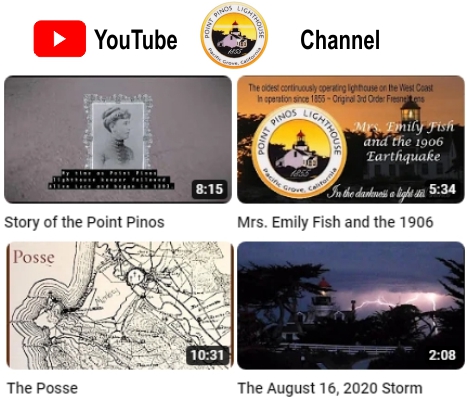
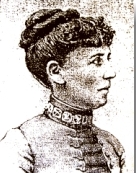
There were two female lighthouse keepers, Emily Fish and Charlotte Layton. Mrs. Layton got the job when her husband Charles died. She later remarried and her new husband, George Harris, became the new lighthouse keeper.
90 Asilomar Avenue
(near Lighthouse Ave.)
Pacific Grove, CA, 93950
This email address is being protected from spambots. You need JavaScript enabled to view it.
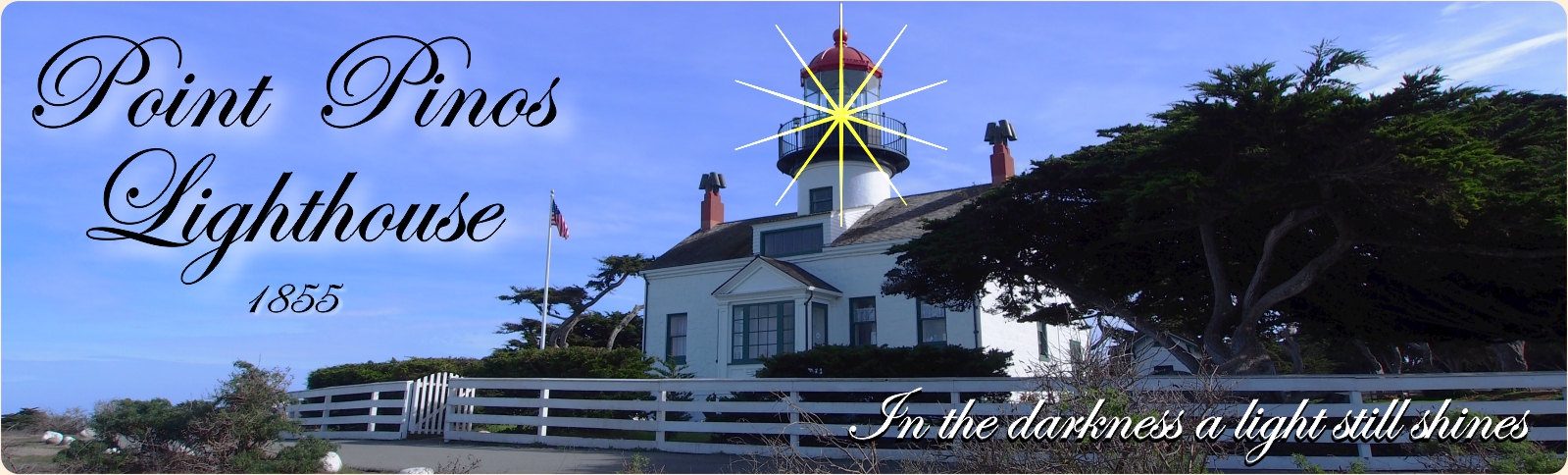
The Point Pinos Lighthouse in Pacific Grove, California, is maintained by an all-volunteer staff of restoration experts, docents, and historians. As with all active lighthouses and aids to navigation, the actual electric light itself is maintained by the U.S. Coast Guard.